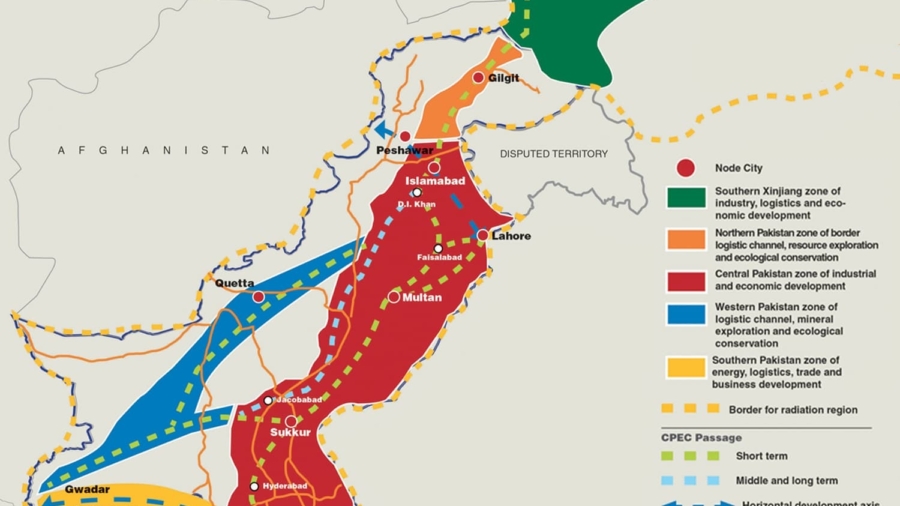
The China-Pakistan Economic Corridor (CPEC) is a monumental project that aims to enhance connectivity and cooperation between China and Pakistan. Launched in 2013, CPEC is a major component of China’s Belt and Road Initiative (BRI). As the project transitions into its second phase, it is crucial to understand the objectives, key projects, and implications of this development. This article provides a detailed look into CPEC Phase 2, its significance, and its future prospects.
Background
CPEC, a collection of infrastructure projects, was designed to strengthen economic ties between China and Pakistan. The first phase focused on developing transport infrastructure, energy projects, and the Gwadar Port. Key achievements included the construction of highways, such as the Karakoram Highway, and energy plants that addressed Pakistan’s chronic power shortages. With these foundational projects largely completed, CPEC Phase 2 aims to build on this success by expanding into industrial and social sectors.
CPEC Phase 1 successfully laid the groundwork for a more connected and energy-secure Pakistan. The completion of projects like the Gwadar Port has positioned Pakistan as a strategic maritime hub, potentially transforming its economic landscape. The port not only provides China with direct access to the Arabian Sea but also opens up new avenues for trade and investment in Pakistan. The development of energy projects, such as coal, wind, and solar power plants, has been pivotal in addressing the energy crisis that plagued Pakistan for decades. These efforts have resulted in improved electricity availability, which is vital for industrial and economic growth.
Objectives of CPEC Phase 2
Phase 2 of CPEC has several core objectives aimed at fostering sustainable economic growth in Pakistan:
Economic Growth: One of the primary goals is to drive economic development by establishing Special Economic Zones (SEZs) across Pakistan. These zones are intended to attract foreign investment, create jobs, and boost industrial productivity. By focusing on sectors such as manufacturing, technology, and agriculture, SEZs aim to transform Pakistan into a competitive regional hub for trade and industry (Ahmad, 2021)
Special Economic Zones (SEZs): Several SEZs are planned, including in Rashakai, Faisalabad, and Dhabeji. These zones will focus on manufacturing, technology, and agriculture, aiming to make Pakistan a hub for regional trade and industry. The Rashakai SEZ, for example, is strategically located on the CPEC route and aims to attract investment in sectors like textiles, food processing, and construction materials. The Allama Iqbal Industrial City in Faisalabad is designed to be a center for industrial activity with a focus on sectors such as chemicals, automotive, and engineering (Ahmad, 2021)
Agriculture: Modernizing Pakistan’s agricultural sector is another key objective. This includes introducing advanced farming techniques, improving irrigation systems, and ensuring food security through increased productivity. By leveraging Chinese expertise in agriculture technology, Pakistan aims to enhance crop yields, reduce post-harvest losses, and improve the overall efficiency of its agricultural practices (Shah, 2023)
Technological Collaboration: Phase 2 emphasizes technological collaboration between China and Pakistan. Initiatives include technology transfer, joint research and development, and the establishment of innovation centers. These efforts are expected to drive innovation in various sectors, including manufacturing, agriculture, and information technology, ultimately contributing to Pakistan’s economic diversification (Zhang, 2021)
Key Projects and Initiatives
CPEC Phase 2 encompasses a range of ambitious projects:
Infrastructure Development: Continued development of transport infrastructure is crucial. New road and rail projects are planned to enhance connectivity within Pakistan and with neighboring countries. Key projects include the upgrade of the Main Line-1 (ML-1) railway and new highways linking major economic centers. The ML-1 project, one of the largest under CPEC, involves the complete overhaul of the existing railway line from Karachi to Peshawar. This upgrade will significantly reduce travel time and improve the efficiency of cargo transport, facilitating trade and commerce (Khan, 2020)
Energy Sector Projects: Phase 2 will see further expansion in the energy sector, focusing on renewable energy sources such as wind, solar, and hydropower. These projects aim to provide sustainable energy solutions and reduce Pakistan’s dependence on fossil fuels. The development of the Diamer-Bhasha Dam, for instance, is expected to boost Pakistan’s hydropower capacity, contributing to long-term energy security and providing water storage to support agriculture (Li, 2023)
Industrial Cooperation: The development of industrial parks and manufacturing hubs is a priority. Joint ventures between Chinese and Pakistani companies are encouraged to boost industrial output and technological innovation. Industrial cooperation under CPEC is not limited to large-scale industries; it also includes small and medium-sized enterprises (SMEs) which play a crucial role in economic development. The focus on SMEs aims to create a more inclusive industrial base, providing opportunities for local entrepreneurs and businesses (Malik, 2022)
Social Sector Development: CPEC Phase 2 also includes initiatives to improve healthcare, education, and social services. Projects such as new hospitals, schools, and vocational training centers are designed to enhance the quality of life for Pakistani citizens. The establishment of modern healthcare facilities in remote areas aims to provide better medical services to underserved populations. Similarly, investments in education and vocational training are expected to equip the workforce with the skills needed to thrive in an evolving economy (Hussain, 2023)
Strategic Importance
The strategic significance of CPEC Phase 2 extends beyond Pakistan and China:
Geopolitical Implications: CPEC is strategically important for China as it provides a direct trade route to the Arabian Sea, bypassing the Strait of Malacca. For Pakistan, it enhances its strategic importance in the region and strengthens its economic ties with a global superpower. The Gwadar Port, in particular, serves as a gateway for Chinese goods, reducing transit time and costs for trade between China and the Middle East, Africa, and Europe (Wang, 2022)
Economic Corridor Connectivity: CPEC is a vital part of China’s Belt and Road Initiative, which aims to create a vast network of trade routes across Asia, Africa, and Europe. By improving infrastructure and connectivity, CPEC enhances regional trade and economic integration. The improved infrastructure not only facilitates trade but also attracts investment in various sectors, contributing to economic growth and development (Zhou, 2021)
Challenges and Criticisms
Despite its potential benefits, CPEC Phase 2 faces several challenges:
Financial Sustainability: There are concerns about the financial sustainability of CPEC projects. Critics argue that the debt incurred may lead to economic dependence on China. Ensuring transparent financial management and viable economic returns is essential. To address these concerns, both countries need to implement robust financial oversight mechanisms and prioritize projects with clear economic benefits (Ahmed, 2023)
Local Impact: Some critics highlight the social and environmental impact on local communities. Displacement of people, environmental degradation, and unequal distribution of benefits are significant concerns that need to be addressed. It is crucial to involve local communities in the planning and implementation of projects to ensure that development is inclusive and benefits are equitably distributed (Saeed, 2022)
Security Issues: Security remains a major challenge for CPEC projects, particularly in volatile regions. Ensuring the safety of Chinese workers and protecting infrastructure from militant attacks are ongoing priorities. Both countries must work together to enhance security measures and ensure the smooth execution of projects (Rana, 2023)
Future Prospects
Looking ahead, CPEC Phase 2 offers promising prospects:
Economic Projections: If successfully implemented, CPEC Phase 2 could significantly boost Pakistan’s economic growth. Improved infrastructure, increased industrial output, and enhanced agricultural productivity are expected to drive economic expansion. The establishment of SEZs and industrial parks is likely to attract significant foreign investment, creating jobs and boosting economic activity (Raza, 2022)
Long-term Benefits: The long-term benefits of CPEC Phase 2 extend beyond immediate economic gains. By fostering technological collaboration and enhancing human capital, the initiative aims to create a more diversified and resilient economy. The focus on innovation and technological development is expected to drive long-term economic growth and competitiveness (Lin, 2021)
Regional Integration: CPEC Phase 2 also holds the potential to promote regional integration. By improving connectivity and facilitating trade, the initiative could strengthen economic ties between South Asian countries and beyond. Enhanced regional cooperation and integration are likely to contribute to peace and stability in the region (Qureshi, 2023)
Conclusion
CPEC Phase 2 represents a critical phase in the development of the China-Pakistan Economic Corridor. With its focus on economic growth, industrial development, and social sector improvements, Phase 2 aims to build on the successes of Phase 1. However, the initiative faces significant challenges, including financial sustainability and security concerns. By addressing these issues and ensuring inclusive development, CPEC Phase 2 has the potential to transform Pakistan’s economy and enhance regional integration.

Hamza Habib Ahmed is an independent researcher and analyst. He hold a degree in Journalism and Media Studies from Forman Christian University. Currently serving as a Social Media Analyst at ISPR..
Add a Comment