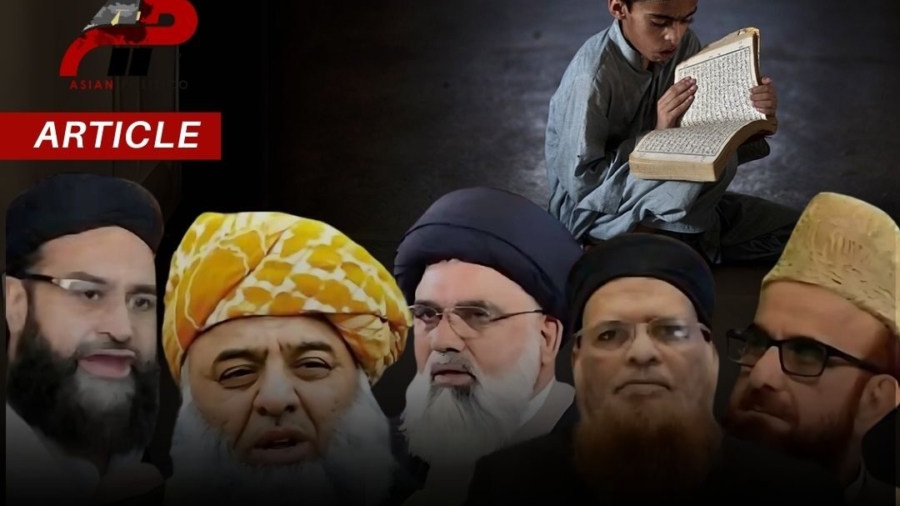
Religious seminaries known as Madrassas have been associated with educational and cultural life of the people of Pakistan right from its inception. Nonetheless, their functions in contemporary society have been quite ambiguous, primarily after the emergence of international security threats and internal transformations. The administration and control of Madrassas have become a key focal point as a political, educational, and a national security question. In this article, the points why madrassa reforms should be done will be presented, the problems that are connected with it, and its possible outcomes for Pakistan will be considered.
Private schools at Madrassah level had their roots from the British colonial period regulated by Societies Registration Act of 1860. Initially they were mainly center on Islamic theological education. Nevertheless, years of weak supervision indiscreetly led to the erosion of the original objectives and roles of the madrassas, and sometimes, certain madrassas perceive themselves as radical ideological training and militant bases. Crandall also explains that after the events of 9/11 the world community has focused again on Pakistan’s madrassas. Since 2015 the National Action Plan (NAP) identified the problem and stressed the need for their reforms to bring these institutions in compliance with the national and the international levels.
Current Progress and Political Resistance
For now, more than eighteen thousand four hundred madrassas are verified under the new law, along with no problems in the verification process. Such progress suggest capability of most madrassas to submit to state regulation and oversight. However, it is not easy to attest due to the political opposition majorly from MMA and its coalition group JUI-F led by Maulana Fazlur Rehman.
It would further seem that political considerations are more important to the JUI-F when it comes to madrassa reforms. In the past the party has relied on the madrassas as a source of power; using the students and teachers for fraising and electoral votes. Madrassas’ registration under the Education Ministry or other state departments compromises it. Additionally, financial openness and audits would compromise the means to regulate finances linked to these institutions, which would reduce the party’s influence still further.
Key Challenges in Madrassa Reforms:
The process of reform in the madrassas have faced several problems, political issues being relevant amongst them. The political leader Maulana Fazlur Rehman strongly condemned proposed amendment in the societes registration act especially regarding which ministry should monitor the madrassahs. His plea to switch Ministry responsibility from one to another as in Interior, Education, and Industries, seems to be more of political gimmicks rather than addressing justifiable issues on the educational system. This opposition can mostly be viewed as a kind of stalling, and it would appear that rather than a reasonable critique of the contents of the reform, it is a disagreement with the approach that must be taken with the management of madrassa reforms.
In addition, the madrassa reform bill has been slowed down due to some technical problems that arose around its legislation. That position is contrary to Section 59 of the Constitution which states that the President can return a bill to the Parliament if the bill has proceeded beyond its second reading on the grounds of legal objections, but the President in passing the bill has also stated legal objections and mentioned that the processes to pass the bill have failed to address key technical issue. Even though these arguments are sensible, they only indicate that problems of integration are not a relic of history but are crucially manifest in intergovernmental relations between federal and provincial governments. This is most testing especially in relation to the 18th Amendment where education is devolved to the provinces and hence the need for more a centralised strategy in dealing with matters of madrassas.
Also, certain madrassas are extremely reluctant to adopt most ‘secular’ curricula as part of their syllabi, saying this will waters down their religious focus. To overcome such resistance, a lot of sensibility will be employed to explain to the followers, the school and the Islamic patriarchs as to how Islamic and modern education can be implemented without necessitating change of the religion’s basic tenets. Last but not the least; the relentless abuse of madrassa reforms also stems from inadequate monitoring mechanisms. As a separate challenge, the regulatory bodies which oversee the implementation of reforms often lack the required financial capital to enforce compliance in madrassas. Lack of funds to do the same themselves also makes it difficult to introduce modern education and support the development of appropriate madrassas facilities.
Addressing the Challenges:
The following steps are needed in order to counter the difficulties of madrassa reforms: First of all, the very legislation needs to be made more resistant. The concerns by the President based on legal grounds such as early passing of the bill must also be considered. The amendments should therefore be technically well worked without any weakness in law. An important aspect of this is, therefore, defining authorities of the federal and provincial governments delineating more powers to the provincial government in line with the decentralization brought about by the 18th Amendment on education. This will ensure that regulation is both; comprehensive, so that no loophole could exist which would allow the animal abusers to escape justice, and cooperative so that all the levels of government can implement monitoring and supervision effectively.
Second, the process of generating a wide support base among the stakeholders is paramount. The process of madrassa reform cannot be effective if the important religious leaders and the representatives of madrassas do not support them. It will be important for stakeholders to understand these groups and engage them in discussions so as to overcome their grievances. However, by revealing that in addition to the modern subjects they would pay attention to religious issues, offering careers for students, and globalization of education, the government can temper the concerns about losing the religious self-governance. It will also ensure adoption of a collaborative model which will avoid cases of resistance that would set back the reform process.
Promises are still more exciting parts of this reform process. Most madrassas have financial problems which compel them to lack adequate funds to renovate their buildings and facilities or include focal issues of the modern syllabi into theirs. This way, registered madrassas will share some of these burdens when quantum of financial grants and other resources would be provided to them. These incentives should go beyond construction of physical facilities but should also train teachers and supply the madrassas with teaching materials that are secular as well as religious so that the institutions can attain the standard of the modern education without losing their religious character.
The educational, as well as the concerned financial auditing, would remain in possession of this body with the authority to oversee the compliance of the madrassas. If there is less or no supervision, the current approaches of change might not have the support that can help change to be enforced and madrassas might still remain inaccessible.
The changes introduced in the Madrassas are undoubtedly an important phase in the Pakistani growth process and the process of integrating into the contemporary world. The challenges identified, therefore, are not beyond manageable given the advancements in global mobile technology. It has already identified over 18,400 madrassas that can be changed dramatically in order to help bring religion education into the 21st century. Alas, political factions including the JUI-F, are staunch in their opposition – a resistance that speaks volumes of power relations but this resistance cannot be allowed to stop the state from doing what is in the national interest.

The Author, Muhammad Wasama Khalid is pursuing a Bachelor's degree in International Relations at the National Defense University (NDU). He has a profound interest in history, politics, and current affairs.
Add a Comment