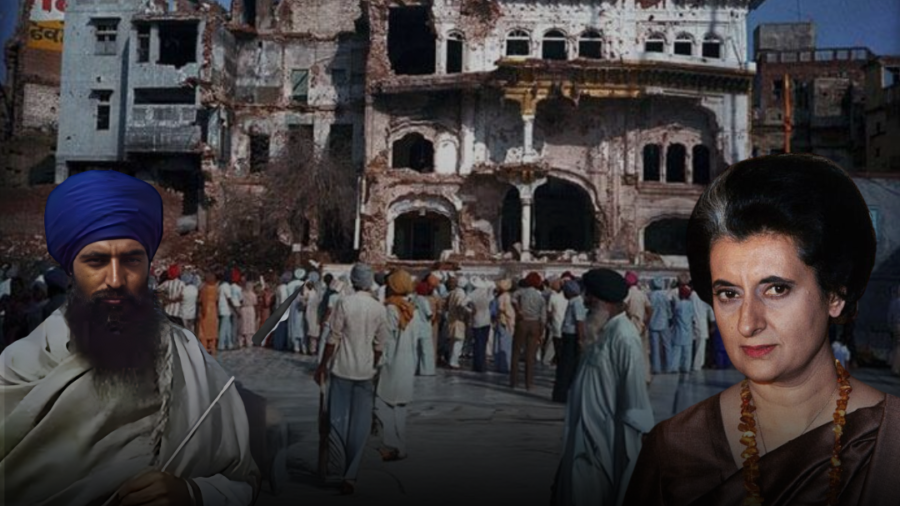
Operation Blue Star, launched by the Indian government on May 31, 1984, remains one of the most controversial and significant events in India’s modern history. This military operation targeted the Golden Temple, the holiest shrine of the Sikhs, in Amritsar, Punjab. The operation’s objective, according to the Indian government, was to remove militant Sikh leader Sant Jarnail Singh Bhindranwale and his armed followers who had taken refuge in the temple complex. However, the broader implications and the manner in which the operation was conducted sparked widespread outrage and had long-lasting effects on Sikh-Indian relations.
Historical Context and Underlying Tensions
To understand the roots of Operation Blue Star, it’s essential to consider the historical context of Sikh-Hindu relations. Sikhism, founded by Guru Nanak Dev Ji in the 15th century, has long stood in opposition to the caste system prevalent in Hindu society. The religion’s teachings of equality and social justice often put it at odds with the Hindu social order, particularly the Brahmins, who held significant socio-religious power. Over centuries, this ideological conflict led to numerous tensions and confrontations.
The situation deteriorated further after India’s independence in 1947. Despite promises from leaders like Mahatma Gandhi and Jawaharlal Nehru assuring Sikhs of their rights and autonomy, many felt betrayed as the new Indian government failed to deliver on these commitments. The Sikh community’s demand for a separate Punjabi-speaking state and greater autonomy was met with resistance, exacerbating feelings of marginalization and discrimination.
The Rise of Sant Jarnail Singh Bhindranwale
By the late 1970s and early 1980s, Punjab was a hotbed of political and social unrest. Sant Jarnail Singh Bhindranwale emerged as a prominent leader advocating for Sikh rights and addressing grievances against the Indian government. His fiery speeches and increasing influence alarmed the authorities, who saw him as a threat to national unity.
The Anandpur Sahib Resolution, a set of demands presented by Sikh leaders, called for greater autonomy for Punjab, the return of Chandigarh to Punjab, a fair share of river waters, and the declaration of Amritsar as a holy city. The government’s indifference to these demands and the increasing militarization in Punjab set the stage for a confrontation.
The Operation and Its Aftermath
Operation Blue Star commenced on May 31, 1984, with the Indian Army laying siege to the Golden Temple. Over the next few days, intense fighting ensued, resulting in significant casualties on both sides. The use of tanks and heavy artillery in the sacred precincts of the temple was particularly shocking and deeply hurt the sentiments of Sikhs worldwide.
The operation officially ended on June 6, 1984, but the repercussions were far-reaching. The Akal Takht, a vital building within the temple complex, was heavily damaged. Thousands of innocent civilians who had come to the temple to observe the martyrdom day of Guru Arjan Dev Ji were caught in the crossfire. The heavy-handed approach of the Indian military, coupled with the desecration of a sacred site, fueled anger and resentment among Sikhs.
In the months and years following Operation Blue Star, the Sikh community experienced further persecution. The assassination of Prime Minister Indira Gandhi by her Sikh bodyguards on October 31, 1984, led to anti-Sikh riots, resulting in the deaths of thousands of Sikhs across India. These events solidified a deep sense of injustice and alienation among Sikhs, contributing to the rise of separatist sentiments and calls for an independent Sikh state, Khalistan.
The Legacy of Operation Blue Star
Operation Blue Star is a pivotal chapter in the history of India and the Sikh community. It highlighted the deep-seated issues of religious and cultural autonomy, state violence, and the struggle for minority rights. The operation and its aftermath have left an indelible mark on Sikh-Indian relations, with ongoing debates about the rights of religious and ethnic minorities in India.
While the immediate objective of the operation—to remove Bhindranwale and his followers—was achieved, the broader consequences have been complex and far-reaching. Operation Blue Star not only altered the political landscape of Punjab but also influenced the global Sikh diaspora, many of whom sought refuge and a new beginning in countries around the world.
As India continues to grapple with its diverse religious and cultural fabric, the legacy of Operation Blue Star serves as a reminder of the importance of dialogue, tolerance, and the protection of minority rights in maintaining national harmony.

Ramsha Waheed holds a Master's Degree in English literature. Her areas of interest include history and research, particularly in the Indo-Pak region.
Add a Comment