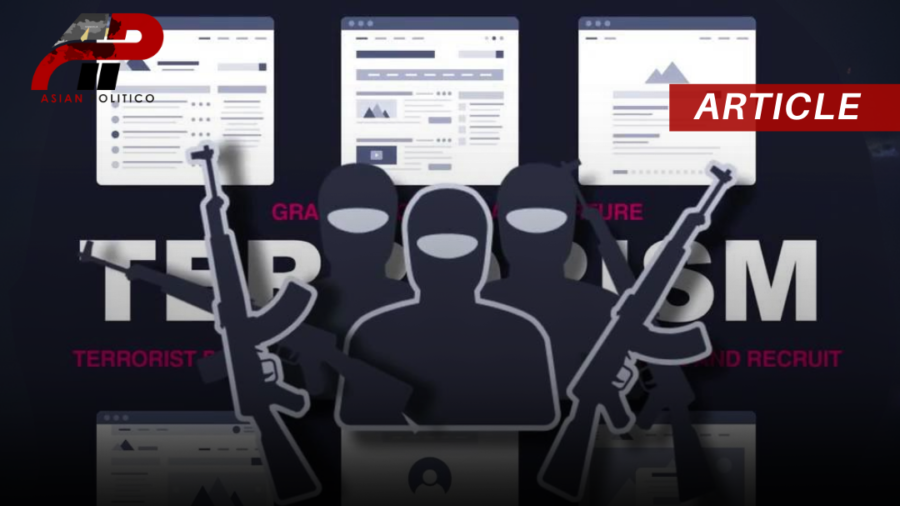
Violent extremism refers to the actions, philosophies, or beliefs of individuals or groups who engage in violent acts to attain their objectives, whether driven by ideology, politics, or religion. Individuals who engage in violent activity often disdain laws, oppose democratic ideas, and frequently strive to subvert community order. Violent extremism has spread rapidly over the world, posing one of the most serious challenges to international peace and development.
A person driven by rage may resort to extreme methods, such as conducting violent crimes or even suicide bombs, feeling that these are the only ways to exert authority or achieve their aims. Such people frequently see these heinous practices as justifiable ways to impose terror and dominance over others. When multiple groups collaborate to carry out violent activities aimed at killing or terrorizing communities, this is recognized as “countering violent extremism.”
According to UNESCO, violent extremism is defined as “the beliefs and actions of people who support or use violence to achieve ideological, religious, or political goals.” The UN General Assembly emphasizes that violent extremism is neither new nor confined to any specific region, nationality, or belief system.
Historical Background
Countering violent extremism (CVE) began in the aftermath of 9/11, and techniques have evolved greatly since then. Between 2005 and 2011, almost £80 million was spent on local efforts aimed at preventing Islamist indoctrination. According to research, Al-Qaida-affiliated madrassahs were active in training individuals to become violent extremists. This raises the question: Are madrassahs necessarily associated with such activities? Islam, which promotes peace and community development, strongly opposes violence. However, it is certain that some Al-Qaida-affiliated madrassahs received significant funding—roughly $8 billion and 7,000 tons of weapons—from a variety of sources.
Extremists perverted the notion of jihad, which is usually split into Jihad-e-Akbar (the greater battle) and Jihad-e-Asghar (the lesser struggle), to serve their own purposes. They twisted these ideas, brainwashing people into thinking it was their responsibility to designate others as non-believers and then harm them. However, it is critical to recognize that such violent interpretations do not reflect the views of the larger Muslim community.
Countering violent extremism strategic planes:
The EU’s 2005 counterterrorism plan was based on four pillars: prevention, protection, pursuit, and response. In 2011, Australia, Canada, and the United States also implemented national counter-violent extremism (CVE) plans. Many governments are developing CVE strategies to address violence and extremism. These programs are centered on making critical decisions to ensure protection in political, ideological, religious, and regional contexts, ultimately protecting mankind from conflict and violence.
Following 9/11, the breakdown of some systems resulted in the formation of violent organizations involved in extreme activity. Radicalization is a phrase commonly used to describe the process by which groups or individuals get involved in violent extremism. While radicalism is frequently associated with negative effects, it is vital to realize that radical ideas and ideologies can occasionally inspire beneficial social change, as seen by the abolition of slavery in the United States.
Many governments have strategic measures in place to protect citizens, including the use of telephone services and helplines. In Pakistan, the National Counter Terrorism Authority (NACTA) continues to operate to protect the country’s security, with a dedicated helpline for CVE to help prevent extremism in society.
Are terrorists made, not born?
As is often stated, Countering Violent Extremism (CVE) involves a group’s attempt to engage with society. But is it true that terrorists are made, not born? When individuals are psychologically or physically disturbed, they may lose sight of the fundamental beliefs of their religions, leading to misinterpretations and, ultimately, aggressive behaviors.
A lack of understanding of one’s religious teachings can foster violent tendencies. For instance, when someone commits a suicide bombing, they are aware of the catastrophic consequences, yet their actions are driven by deeply flawed beliefs. All violent behaviors are rooted in such misguided ideologies, compounded by various environmental and social influences, intellectual brainwashing, personal experiences, social connections, and psychological development. These factors can converge to create extreme situations, which often mark the beginning of violent extremism.
Terrorism has no religion
While many Muslims are often unfairly labeled as terrorists or extremists, it’s crucial to remember that the majority of Muslims are peaceful and work to support their countries and communities. In fact, most terrorist organizations primarily target Muslims and Muslim-majority countries. According to the United Nations, Muslims account for the vast majority of terrorism victims. In 2019, the global terrorism index showed that the highest levels of terrorism were recorded in Muslim-majority countries.
The Holy Quran and Islamic teachings emphasize peace, compassion, and justice, advocating for harmony and the well-being of society.
Preventive measures:
Preventive interventions for violent extremism have multiple components. Clear thoughts and beliefs are crucial for effective prevention. Here are some of the most discussed and important preventive strategies to control violence.
Use of social media and communication:
In Pakistan, social media has become a powerful medium for communication, information sharing, and community development, significantly transforming the world of communications. Various interactive platforms offer widespread appeal and reach a large audience. YouTube is a popular video-sharing network, with 2.49 billion visitors per month and 47% of all internet users globally. Twitter boasts over 500 million monthly active users, with 600 million reported as of May 2024. By April 2023, Facebook had 2.989 billion monthly active users. As of August 2024, WhatsApp users total 2.3 billion.
In addition to social media, traditional sources of communication like television, radio, and media coverage continue to play a crucial role in shaping society.
Is social media a supporter of violent extremism?
While social media can play a role in preventing violent activities, it also serves as a potent platform for terrorist organizations to pursue their malicious agendas. In recent years, successful online propaganda by violent extremist groups has influenced various social segments, including non-Muslims from the West. The attacks in Manchester and Barcelona in 2017, along with recent lone-wolf attacks in the UK, the US, and Canada by their respective citizens, are glaring examples of how effective extremist propaganda has attracted thousands of recruits from Europe and North America, promoting Syria, Iraq, and Afghanistan as “the choice for generations of extremism.”
Social media is increasingly becoming the most powerful weapon for extremist activities, particularly through platforms like Facebook, where communities can be engaged in ominous activities. Once these communities are established, countering violent extremism becomes more challenging than it was with older tools. As a result, social media is often referred to as both a “source and sink” for extremism. When someone plans an attack or a bombing, they often first engage a community of individuals, brainwashing them and inciting them to commit further atrocities. This creates a network of extremism facilitated by social media platforms.
Moreover, the negative use of social media can damage society, as individuals may claim to promote positivity through their beliefs but, in reality, contribute to sectarian violence without realizing it.
How can social media help in preventing and countering violent extremism?
Social media platforms pose a significant challenge in eradicating extremism, as they can also serve as powerful tools for spreading harmful ideologies. However, they play a crucial role in fostering interactive communities that can counter these negative influences. By leveraging platforms like Facebook and other websites, social media can help build optimistic and resilient communities.
Here are some key strategies for making social media a versatile and productive tool for promoting positive change:
- Promoting positive Narratives: Social media can be used to spread messages of hope, tolerance, and understanding, helping to counteract extremist propaganda.
- Engaging Youth: By encouraging young people to share their ideas and participate in constructive discussions, social media can empower them to contribute positively to society.
- Building Communities: Creating online spaces where individuals can connect over shared values and goals can strengthen community bonds and reduce the appeal of extremist ideologies.
- Educational Campaigns: Social media can be a platform for educating the public about the dangers of extremism and promoting critical thinking skills to resist radicalization.
- Supporting Victims: Providing support and resources for those affected by extremism can help build resilience within communities and prevent further radicalization.
By focusing on these areas, social media can become a powerful tool for promoting confidence and positive change among youth, helping to shape a more peaceful and united society.
The most prior thing towards the eradication of violence is building the confidence in youth because youth are major investors in society. When the youth of any country is strong and affirmed with beliefs, then any type of violent activity is lessened in number. The most probable example is China. The youth of China only focused on its goal and target without any involvement of violent activity. Why? The first thing repeatedly mentioned is the firm beliefs. If anybody is the target of violent extremism, then the target is youth because the brainwashing of the young generation is easy as compared to others so the implementation of correct beliefs and ideologies plays a major role in the formation of a learning society. Now the question is: how youth may stop or change the attitude of countering violent extremism? About billions of teenagers are using social media in their daily routine; some of them don’t even know that the thing they are watching or listening to is better for them or not, but they use it either for the sake of entertainment or for the sake of jobs.
In Pakistan, unemployment has become the first known issue of today; even many people might be involved in such activities by searching for jobs. In Facebook and many other platforms, many fake IDs are still doing so by putting the youth in violent activities. So many of them become part of it to fulfill basic needs. So the only way to prevent the countering of violent extremism is to make the youth strong by building conductive sources like Facebook, Twitter, or any website as a major part of establishing and designing the whole world as a peaceful land. Now the question is: how is the use of Facebook helpful in the prevention of violent extremism? The most attainable thing in this regard is educating them in different schools, colleges, and universities and also on social media platforms. The next thing is to make the sense of belief in any kind of content on Facebook must be very important and to protect society from violence.
Designing the awareness programs
Communication on different platforms and establishing awareness programs on social media may overcome the chance of countering violent extremism. Making the skilled team by the government and different private sectors can also increase the rate of confidence to tackle the different situations and overcome the violent extremism. Preventive measures before any violent activity may enhance the skill of problem solving and desired approach to tackle the situation. Inter-dialogue of different countries may enhance the power of communication and resolve the political and ideological issues.
Digitalize the world
By forming the digital ecosystem through the global spread of cyber security, we overcome the chance of CVE. Another very powerful attempt to do is to make the cyber police or cyber commission work only for threat detection and any violent activity.
Communication and social media are powerful tools in the prevention of violent extremism. When used correctly, social media can play a pivotal role in countering extremist narratives. It is also crucial to raise awareness about the true teachings of religions, particularly regarding concepts like jihad. Religious scholars should take the lead in educating youth on these topics to prevent the misinterpretation of beliefs. Social media users must be informed about online scams and encouraged to engage with credible platforms. Most importantly, we must understand that overcoming violence begins with our beliefs and our collective determination to eradicate it. The government should enforce strict laws and regulations on cybercrime, implementing comprehensive monitoring and control programs to prevent the spread of violent extremism.

The Author, Sana Imtiaz is a dedicated researcher and an avid writer. Currently pursuing a Bachelor's degree in Plant Sciences at the University of Sargodha, she combines her passion for botanical research with a keen interest in current affairs, offering a unique blend of scientific insight and socio-political awareness in her work.
Add a Comment