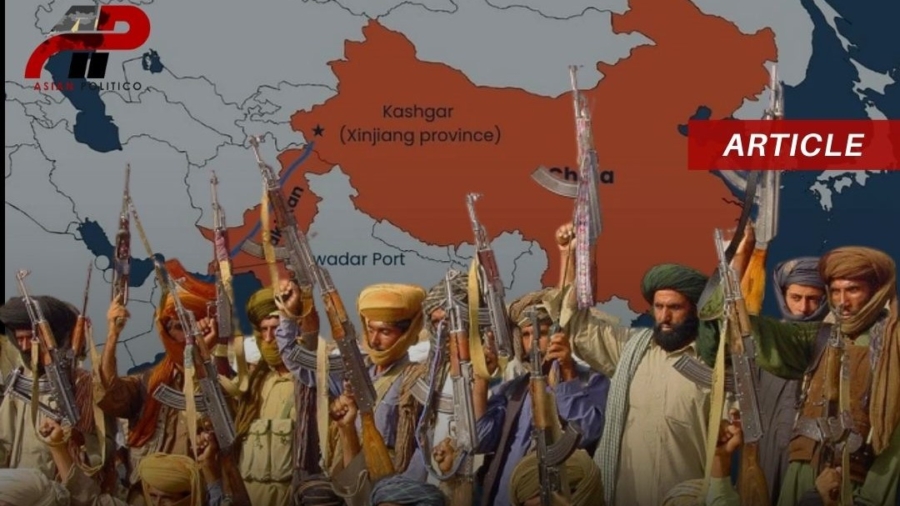
The security vacuum in the land of Baluchistan has always been a challenge to security agencies and their related institutions. Because of the landscape and the adoption of different strategies by the insurgent groups (BLA), the evolving tactics have proved to be valuable for the insurgent groups. Within years, many measures have been taken by the Pakistani army and military agencies in order to combat this menace, which has resulted in an immense decline in terrorist activities in the region. But projects like CPEC, which is considered to be a game changer for the region, have also been at the forefront of the insurgent group.
Many attacks have been carried out on side projects of this flagship project by insurgent groups, impacting their operations in the region of Baluchistan and causing challenges to the security agencies. Traditionally, it has been observed that the attacks by the BLA have been characterized by low-intensity skirmishes and sporadic attacks. However, in recent months, the group has demonstrated a disturbing shift in tactics, targeting CPEC infrastructure and personnel with increasing sophistication and frequency. This tactic could be a massive challenge for the concerned authorities to deal with.
The evolving tactics of the BLA can be analyzed as a war against those who are investing in the development of the region with the mindset of being exploited by the government and foreign direct investors. The insurgent group has targeted security personnel and civilians on many fronts, causing fear among the indigenous populations most of the time. But by now, they are targeting only the infrastructure and foreign investors (Chinese) working in CPEC. As reported through the Al Jazeera paper, BLA’s armed wing has carried out “three major attacks using more than 24 suicide bombers” this year alone, which he says signals a shift in strategy.
These attacks are observed as highly tactical moves by the insurgent group BLA because the attacks have been conducted in those areas where security was believed to be strict and more in numbers, like Gwadar. As reported by Fakhar Kak Khel, these attacks have forwarded the message to the higher authorities of Pakistan that, despite strict security measures, they are able to reach their targets. Further, these attacks are intensified as a message to the world, too, that Gwadar, along with other regions of Baluchistan, are not safe to invest in for China or any other interested foreign party.
This evolving tactic is seen as the shift of attacks from hit-and-run to direct assault on the operational and infrastructural capacity of CPEC. The rise in militancy attacks has become a major concern for the security agencies due to the increase in the number of attacks compared to the last six years. The major attacks have been on consulates, five-star hotels in Gwadar, and stock exchanges. Not only this, but the profound evidence also shows that CPEC has been politicized by external forces and is being seen as a regional game changer. According to the latest developments, two of the commanders were arrested in different intelligence operations. Upon investigation, it was revealed that the banned outfits BLA and TTP are working together to carry out attacks on CPEC and in Pakistan, with India being a single investor, as told to the press by Interior Minister Langau.
Further, he elaborated that if you look at the financial support or intelligence of the BLA and the TTP, or their members sitting abroad, there is no doubt that RAW (Research and Analysis Wing) is funding them.” Langau stated. So, this clearly shows how India is indirectly involved in terrorist activities via helping BLA and TTP in Pakistan and also on CPEC, affecting its operational capacity and causing fear among investors to invest in Pakistan for the future. The surge in militancy attacks on CPEC clearly indicates how CPEC can be a game changer for Pakistan’s rise in South Asia, challenging the so-called hegemony of India.
But what it requires is the safety of the Chinese investor as well as those working on the project. It can be ensured that, through a military operation in those areas, accurate intelligence sharing is necessary for its elimination. However, it is believed that militancy itself will be hard to eliminate without passing on the economic benefits of the infrastructural project to the locals, so that there will be no space for grievances among the indigenous population.

The Author, Muhammad Anees Khan is a bachelor's student of international relations who writes on economic and security issues in Pakistan.
Add a Comment