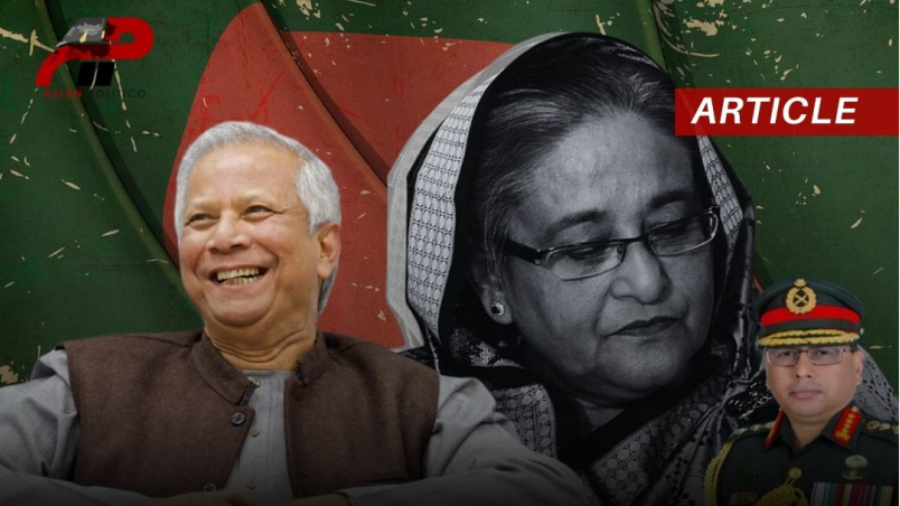
After a vicious student uprising, former Bangladeshi prime minister Sheikh Hasina was forced to resign and flee. The political upheaval has put the country in a turmoil with economic uncertainty on the rise. Hasina’s 15- year rule has been accused of numerous human rights abuses, judicial martial killings, rigging elections and politicizing of domestic institutions. 84-year-old Muhammad Yunus has stepped up to lead the new interim government as the new “chief advisor”. He has vowed to repair the system and put forward his future plans. Yunus aims to address restore the peace, law and order, corruption, economic challenges. To move forward, initiating reforms and holding free and fair elections remains among the top priority for the government.
Despite Yunus’ acclamations, little progress has been made under his interim leadership. Unrest and uncertainty continues to persist within the society, creating anxiety and fear for the general public and the minorities. In the recent times, several attacks have been made against the police personals. The involvement of police personal in the actions taken against the protestors has angered the victims. In spite of these attacks, police have refused to maintain the law and order situation. Without efficient security measures, Hindu minorities have been targeted repeatedly. Since Hasina’s departure, 205 attacks have been reported against minorities, including the looting and destruction of several holy temples, shops and homes of the Hindu community. International organizations, such as Amnesty International, have urged the Bangladeshi authorities to take strict action against the hate crimes and ensure that those responsible are held accountable. This raises a crucial question: Can Yunus take steps to ensure the safety of minorities, and will he be able to transform Bangladesh into safe and inclusive country, unlike former leader Hasina?
Looking at the current macroeconomic crisis of Bangladesh, deep-rooted obstacles have hindered the progress. High inflation has been a major problem for the low income households, reaching a 12-year-high of 11.66% in July 2023. Recent protests have disrupted the supply chains and services sector, leading to food shortage and wage insecurity, increasing pressures on the low-wage earners. Additionally, 32 million young people are without education or employment, fueling the unemployment rate within the nation. (Reuters) Amidst the political reset, the interim government needs to tackle the soaring inflation, unemployment, and restoring trust among investors and business community. As mandated by United Nations 2021 decision, Bangladesh is all set to graduate from the Least Developed Countries (LDC) status by 2026. However, the current political and economic upheaval has raised questions on the smooth completion of this major breakthrough. For the prosperous future of Bangladesh, the interim authorities must take steps to employ economic diplomacy, sustainable growth and enhance domestic revenue generation. To achieve this milestone, there is a need for economic reforms, or otherwise a long turbulent road lies ahead to put the country’s economy back on track.
Resolving these issues without a strong and legitimate government seems impossible. Even though Yunus savors majority support, he faces immense pressure from domestic and international figures to hold elections. The constitutional requirement of holding free and fair elections within the ninety days seems like a far-fetched reality. Yunus has repeatedly argued that reforms must be initiated before any elections are held. Although the nature of reforms remains ambiguous and vague. Leading to doubts, can the reforms introduced by Yunus and his cabinet be able to tackle Bangladesh’s broken system.
Another crucial challenge faced by the Yunus’ government and Bangladeshi army has been the penetration of pro-Indian elements within the ranks and institutions. Additionally, the new chief advisor has been criticized for running political trials against civil servants, judges and officers loyal to former leader, though he has denied such claims, and assured that free and fair trials are being run.
These obstacles hinder the progress of the country and raises concerns about whether Yunus can meet the public’s demands. The real challenge for Yunus is to fulfill the aspirations of students, who believe he is the solution to Bangladesh’s challenges. However, if he fails to perform on his commitments, can he face the same fate as Hasina. To ensure the successful completion of these commitments, chief advisor and his team should world diligently to rebuild public trust within the national institutions. Yunus not only needs to change the system but also ensure he does not repeat his predecessors Hasina’s mistakes. To achieve these goals, Yunus must ensure the accountability and transparency of state officials, judges and military officers. Several concerns persist whether interim chief advisor can ensure the institutional independence and autonomy. Additionally, can Bangladesh return to a stable democracy or not. The answer remains unclear and uncertain.
In summary, Bangladeshi interim government needs to take immediate measures to neutralize the escalating political situation. To satisfy the masses, interim government must adopt sustainable, viable and practical solutions. A balance between opposition forces, students, army and government can ensure the smooth sailing of the country. A slight misbalance may can disrupt the progress and can make it difficult for Bangladesh to keep up with rapidly changing world. His success will be dependent on his ability to implement meaningful measures, failure to do so could not only endanger his leadership but also put the country into another disastrous turmoil. The future of Bangladesh’s economy, politics and youth remains in the hands of Muhammad Yunus, and only time will tell if he was able to move Bangladesh towards a stable democratic path.

Maha Shahid is an aspiring student who is currently studying International Relations from National Defense University, Islamabad. Maritime affairs, foreign affairs and Asian issues are her major areas of interest.
Add a Comment