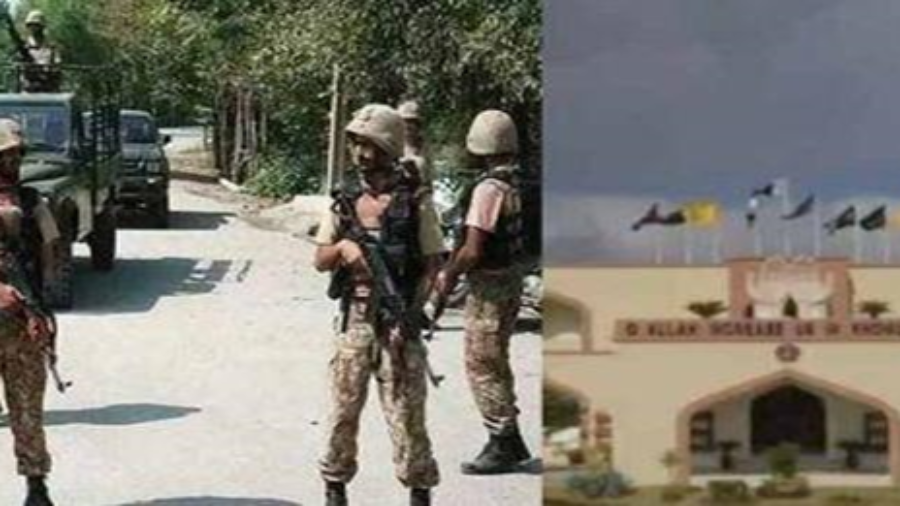
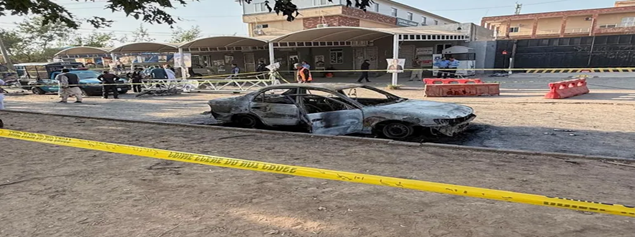
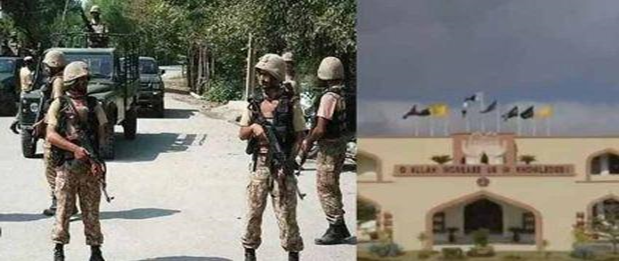
Imagine a court premises especially in the federal capital where everything is going on as if it is supposed to be, but suddenly a blast occurs that leads to instant chaos and sudden shock! This nightmare turned into bitter reality on Tuesday, 11 November 2025 when a suicide bomber caused an explosion near the entrance of Islamabad District Judicial Complex, which is usually crowded, and according to Aljazeera, this explosion resulted in killing 12 people and injuring around 30. This incident also raises questions in the minds of the public that what if this attack happened inside of the court. How many souls that are more innocent may have become targets of this attack? The answer is obvious, that is going to be one of the greatest losses because Islamabad District court is usually overcrowded on working days and during busy hours of court. This attack emphasizes the lack of proper security measures that lawyers, litigants and judges and the public expect from the government as their fundamental right under Article 9 of the Constitution of Pakistan which states “No person shall be deprived of life or liberty save in accordance with law”. Similarly, on Monday, 10th November 2025 a malevolent attack attempt was made on the Cadet College in Wana in South Waziristan, as per reports the militants included one suicide bomber and militants drove a vehicle full of deadly explosives into the main gate of the college but fortunately security forces there successfully prevented this attempt and rescued the students, teachers and other civilians in the college, preventing the recurrence of tragic attack that happened in December, 2014 at Peshawar Army Public School. These incidents patterns show the deliberate attempt to target the two most fundamental pillars of any society that are education and justice! No matter how much the government tries to hide the gap of security measures behind the veil of unsubstantiated blames on countries like India and Afghanistan, in this era our youth is that much prudent to understand all these tactics, and demands accountability and their fundamental right to be secure in their country.
The fact is that in Pakistan, the public expects more fortification in the federal capital areas than other areas of the country; the Islamabad District Court attack clearly breaches this expectation; leaving the public desperate and this obviously results in loss of trust in government. But one of the most important impacts of this incident is the establishment of fear in the minds of people especially those attending courts on daily basis like lawyers, litigants, judges and law students; here I would like to reiterate the words I heard from a female law student “I want to attend the seminar going to be held in the Islamabad District Court but I can’t because my parents are not allowing me to go to court after the recent incident”. These words from one of the students clearly indicate the dissemination of fear among young aspiring lawyers. Furthermore, in Pakistan where females are already struggling in practicing law in courts due to many reasons, this attack adds one more to the list to restrict them from practicing and going to court.
On the other hand, if we shift focus from federal areas towards tribal areas where the Wana Cadet College attack has left a similar pattern of fear in the minds of students and parents where literacy rate is already very low, at 33.3% in Tribal areas and according to Dawn News article “The district-wise details of the merged areas has put South Waziristan on top with having 61.2 per cent illiterate population”. This data evidently indicates that in the areas most parents are not sending their children to schools and colleges; how we can expect any development in these areas if the basic right of education is out of reach. Nelson Mandela, who was a revolutionary president of South Africa once, said, “Education is the most powerful weapon which you can use to change the world”. Moreover, these attacks on schools and colleges have caused long-term psychological damage to the students, and they themselves fear going to educational institutes freely.
All the above framing of issues leads to one major outcome: the weakening of public trust in government and government institutions and if similar attacks continue to take place without taking any important security measures to stop them, then no one in this country will be able to feel secure while going to public places. This loss of trust can lead to political instability, which can further lead to economic instability in the country, and this distrust provokes a further rise of militant tribal security groups. Studies on public sentiment show that after terrorist attacks, public confidence in government institutions declines significantly, as citizens begin to question the state’s ability to provide basic security. Since Pakistan is already facing localized anarchy in some regions, if this is not controlled in time, this may lead towards even worse consequences; a state of anarchy!
Apart from just offering condolences and condemning the terrorist attacks on news channels, the government should place more focus on practically strengthening security measures. First of all, at the legislative level: making stronger policies, bolstering counter-terrorism legislative provisions, and ensuring their implementation is essential because lack of proper implementation is a significant contributor in occurrence of terrorist crimes. Secondly, at the administrative level: providing training for personnel on threat identification and response, improving physical security at key locations such as courts, educational institutes and public places, and enhancing intelligence gathering and emergency response planning. Lastly, at the technical level: enhancing security cameras functional capacity, prudently choosing security cameras locations, installation of advanced surveillance and alarm systems.
It is time for decisive action. Let us demand not just words, but unbreakable shields around our courts and classrooms. Only then can Pakistan transform from a nation scarred by shadows into a beacon of security and progress for generations to come.

Nazifa Munawar
Nazifa Munawar is a second-year law student at the International Islamic University, Islamabad. She has an academic interest in constitutional law and contemporary legal issues. Her broader areas of interest include Islamic Law, Criminal Law, Human Rights, Mediation, and Alternative Dispute Resolution. She is developing her engagement with legal research and scholarly writing.
Add a Comment