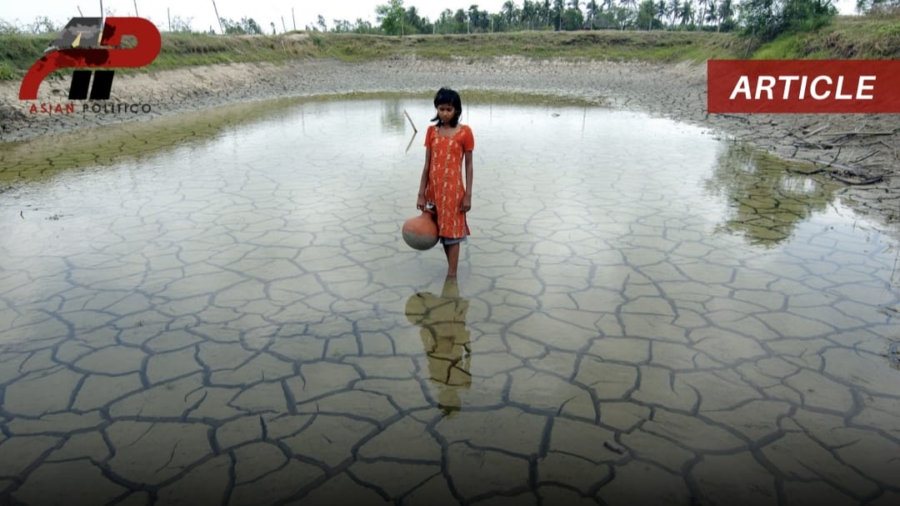
Climate change is undoubtedly one of the most pressing problems in the progressing world. Its drastic and adverse impacts have been witnessed in recent years, when Pakistan was hit by catastrophic floods, and now a new trend of alarming heat waves becomes a troublesome question. This combination of floods and heat waves adds to the agony of the marginalized people of Pakistan and is causing heavy blows to the already dwindling economy of Pakistan.
It is unfortunate for countries like Pakistan to have a minimal contribution to emissions of greenhouse gases while experiencing vigorous consequences. It is calamitous to gaze upon the reports concluding that 2024 is likely to be the hottest year in human history. It is a clear indication that climatic degradation has advanced to a new level. The process of environmental restoration demands a huge span of time. Adding to the rate at which greenhouse gases are being emitted, this goal seems unachievable.
Rising temperatures are not solely the problem of Pakistan; states in the US are breaking daily temperature records; Rio and Spain are boiling under the scorching sun, and the scathing heat waves did not even spare Greece, Turkey, and Cyprus with unusually hot weather. The government in the United Kingdom is declaring a heat wave a national emergency with the first ever level 4 extreme heat warning. Global temperature record streaks continue for countries around the globe. It seems anthropogenic activities have now caused a major toll on our planet, and the price is yet to be paid.
The consequences of these heat waves are far-reaching, posing grave threats to the environment, economy, and public health. The underprivileged masses find themselves in a fit when battling heat. Lack of resources causes them to bear the consequences of rising temperatures, often resulting in heatstroke and dehydration, and to top it off, an ill-administered health system exacerbates their pain. Heat is the problem for the labor class of Pakistan, they are to work under extreme weather conditions just to earn bread for their families. Long-term exposure to the sun and physically demanding work deteriorate the health of outdoor laborers, and seemingly there is no way out.
Rising temperatures may wreak havoc on the agriculture-dominant economy of Pakistan. Temperature effects the crop yield negatively, many crops do not have the ability to cope with high temperatures, resulting in a lack of productivity. And the most critical impact is on water bodies. Drying water resources and barren terrain tell a lot about what is to come. It is vital to undermine the severity of this issue right now, or it might become unaddressable in the near future.
The current circumstances call for an effective and immediate “National heat action policy,” keeping the temperature trends and seriousness of the issue under consideration. People should be well informed of the impacts of heat waves and how to protect themselves. The marginalized groups should be given priority, and a sound and affordable health care system should be made accessible. Highlighting the priority areas would make the task of heat management easier. Providing people with sustainable and lasting cooling technologies could be a game-changer. The safety of people should be at the apex of the list to avert the heat crisis.
The phenomenon of climate change is often linked with terms like “mitigation” and “adaptation.” For a developing country like Pakistan, the process of mitigating the adverse effects of climate change may prove to be a white elephant. Pakistan not only lacks the capital to reduce the severity of the climate issue but also lags in terms of technical equipment and skilled experts. A great proportion of capital is required to counter these environmentally related issues. For a country like Pakistan, wrapped in a high inflation rate and insufficient resources, spending on the environment in the presence of more vulnerable sectors and calling for extensive consideration becomes a big question mark.
The need for time as well as the debt-stricken economy of Pakistan call for a change of approach from mitigation to adaptation. Even with mitigation, if disasters are to come owing to climate change, the best practice would be to switch the focus toward adaptive measures. The gaps in international climate financing are prominent, and the mobility of loss and damage funds towards Pakistan is inadequate. For a developing country like Pakistan with a massive advocacy for loss and damage funds, it is crucial for wealthy nations to make it operational to cater to the huge climate cost of Pakistan. Climate change is no longer a threat for the future; it is a present-day reality demanding immediate action and collective attention. We must confront this crisis and face the looming challenge before it is too late.

The writer is a student of “Government and Public Policy” at National Defence University
Add a Comment