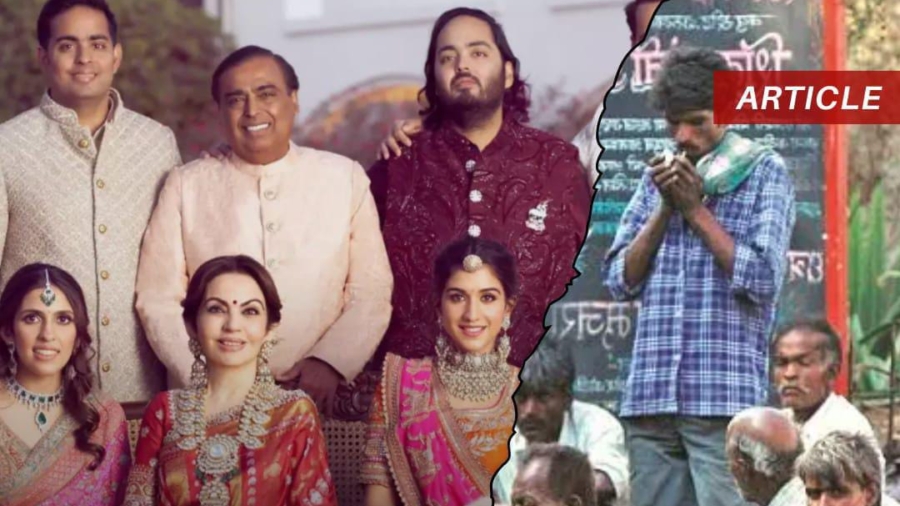
The extravagant wedding of Anant Ambani, son of Mukesh Ambani, is the biggest wedding in India, highlighting its culture and traditions. Mukesh Ambani is the richest man in India, and this wedding showcased their wealth and extravagance. One of India’s largest corporate families, Reliance Industries Limited, has an estimated $122 billion net worth. They operate in practically every industry, from communications to retail to energy to journalism. The Ambani wedding illuminates India’s cultural and ideological neoliberalism. It reveals how exploitation and inequality politics are illogical and contestedly alter norms, wants, and discourses. The wedding symbolizes the culture of the new global elite created by neoliberal globalization. The extravagance, global invitees, and luxury brand sponsorship reflect this culture of excess, individualism, consumerism, and private riches.
A new business oligarchy and entrepreneur class like Ambani’s is another crucial part of India’s development. The Ambani wedding may show how this new elite power is used. With international guests, the Ambanis’ money and power were on display. The family’s power was shown by other international celebrities and corporate executives who attended the presentation. The wedding also showed that India’s richest families are growing apart from the rest of the population. Since the wedding cost $320 million, it revealed how unequal Indian society is. The Ambanis and their guests enjoyed a week of luxury, leaving crores of Indians hungry and poor. The media coverage of the wedding and its aftermath revealed contrasting accounts of such a colossal waste of money in an economically polarized country. The wedding symbolized India’s economic success and global ambitions. Although it promoted Indian culture and soft power and attracted celebrities and premium businesses, millions of Indians remain below the poverty line.
The wedding also drew contrasting perspectives. The wedding was praised by some Indians as a symbol of India’s economic success and desire to become a global power. However, the wedding drew a lot of criticism. Social media was full of jokes and memes mocking the Ambanis for their extravagant spending. Some saw it as a ridiculous display of wealth unrelated to Indian life, and it was seen as vulgar and insensitive to regular Indians’ situations. The wedding highlights India’s development agenda’s flaws and ambiguities. This contrasts with the lavish wedding and millions of Indians’ acute poverty and hunger, raising issues about India’s inclusive and sustainable growth approach. Critics highlighted the environmental and social impacts of such expensive events, arguing that they waste resources and displace residents. Wealth displays in unequal societies are manufactured, as the wedding and media coverage showed. The Ambani wedding is more than an economic event; it’s a cultural artifact that reveals India’s new rules, beliefs, and dynamics as it opens up to the world.
This made the Ambani wedding a symbol and a forum for discussing India’s development challenges. It showed the contradictions of a society experiencing unequal and sometimes conflicting globalization. India’s worldwide economic governance is also considered at the Ambani wedding. India wants to become a superpower, but the world wants to see more. India has been more forceful in asserting its authority and interests as an emerging power in world politics and the global economy. India has advocated for developing market demands and global institution change on multilateral venues.India’s desire to become a developed nation puts pressure on it to demonstrate its responsibility and sustainable development. The Ambani wedding may damage India’s soft power and worldwide ambition. Thus, the huge wedding costs show the wealth gap in India and that most people live in poverty. It reveals that many Indian corporate leaders don’t care about sustainable economic progress for all.
India needs a more sustainable development model that addresses social and environmental challenges as well as economic growth. This implies a paradigm shift from India’s decades-long neo-liberal economic aims and policies. Indian corporate and social elites are also more socially conscious and accountable. This powerful claim states that personal affluence, convenience, and comfort are inextricably linked to public and social welfare.The Ambani wedding shows that private wealth and lavishness are linked to humanity and society. As India strives to become a global economic and political power, it must build an equitable and sustainable development model that should focus on economic equality, climate change, human rights, and democracy in economic interactions and projects.

The author, Fatima Ahmed, is a dedicated student of international relations. She has a keen interest in global politics and economic developments and a passion for understanding the complexities of international affairs. She had actively engaged in various research projects and academic initiatives.
Add a Comment