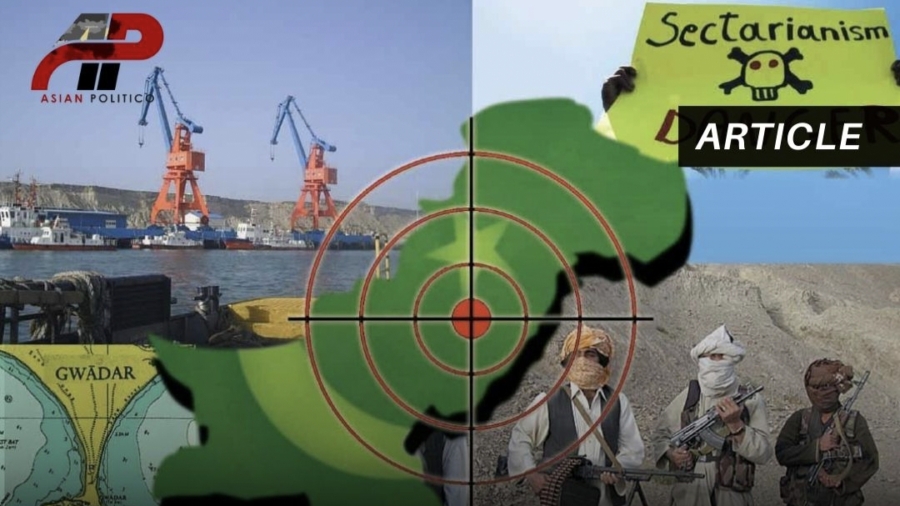
Pakistan is facing numerous security issues. It is a strategically crucial South Asian country that has fewer advantages and more problems due to its location. Pakistan has a severe impact on its stability and development due to both internal and external factors. The country’s security situation poses a significant threat to its very existence as it navigates through the treacherous waters of regional geopolitics. The Indian threat is a perennial concern for Pakistan that can’t be overstated.
India is located on the eastern side of the country. Kashmir is the point of disagreement between both countries that has led to multiple wars and border clashes. There have been multiple attempts to resolve the dispute but the attitude of the Indian government and military is speaking evidence of their uncompromising nature. Both countries go through routine crossfires that result in numerous civilian casualties; this is a clear violation of the ceasefire agreement. In a recent interview, Indian Defense Minister Rajnath Singh said that India would enter Pakistan to kill anyone who escapes over its border after trying to carry out attacks. To this statement, Pakistan’s ministry of foreign affairs said India’s assertion of its preparedness to extrajudicially execute more civilians, arbitrarily pronounced as ‘terrorists’, inside Pakistan constitutes a clear admission of culpability. Thus, the relations between Pakistan and India have worsened.
Afghanistan, too, has emerged as a significant threat to Pakistan, and the Taliban’s takeover has made the terrorist groups like the TTP stronger and increased border tensions. The TTPs attacks in Balochistan, aimed at disrupting CPEC and other development projects, have resulted in significant human and material losses and overall, this proved to be the actions that jeopardize the stability and development of Pakistan. The TTP’s strength has significantly increased due to Taliban control in Afghanistan leading to unfavorable circumstances for the internal stability of Pakistan, and the TTP has gained the ability to instigate Baloch ethnicity and create disturbances in the province of Pakistan. While Pakistan is facing these external challenges, there are internal problems that are weakening its roots. Internally, Pakistan faces a myriad of challenges, including sectarianism, political violence, Baloch separatism, and economic and political instability.
Pakistan held general elections on 2 April 2024, which increased internal opposition, leading to instability. The recent rise of political freedom and blind obedience to political leadership has spawned a new wave of political violence, as evidenced by the May 9 riots that resulted in unexpected chaos and violence between people and the government. Along with that, the sectarian strife between Sunni Deobandi and Shia Muslims has claimed thousands of lives since 2007, with an increasing number of casualties every year. The increasing separatist insurgency in Balochistan, exemplified by the attack on the Confucius Institute at the University of Karachi, caused the fledding of many Chinese teachers and a sense of fear for others staying in Pakistan. This has resulted in a greater crackdown by security forces, leading to distrust among the civilian population and the Pakistani security forces.
Despite all these internal and external challenges, Pakistan is striving hard to maintain stability within the state. In order to cater to these challenges, it must adopt a multipronged approach that should involve the government, opposition, civil society, and security forces. The state should work towards regional collaboration and projects that could help maintain the stability in the state. Pakistan could resolve security issues by engaging with all the stakeholders, including the separatist groups, to address their concerns and problems and find a peaceful resolution. Security issues in Pakistan are of the deepest concern and require immediate attention, as this will lead to regional chaos. It is imperative for Pakistan to take decisive action, leveraging its strategic location and human resources to create a secure and prosperous future for its people. The international community must play its part in supporting Pakistan’s efforts to combat terrorism and promote regional stability.

The author, Fatima Ahmed, is a dedicated student of international relations. She has a keen interest in global politics and economic developments and a passion for understanding the complexities of international affairs. She had actively engaged in various research projects and academic initiatives.
Add a Comment