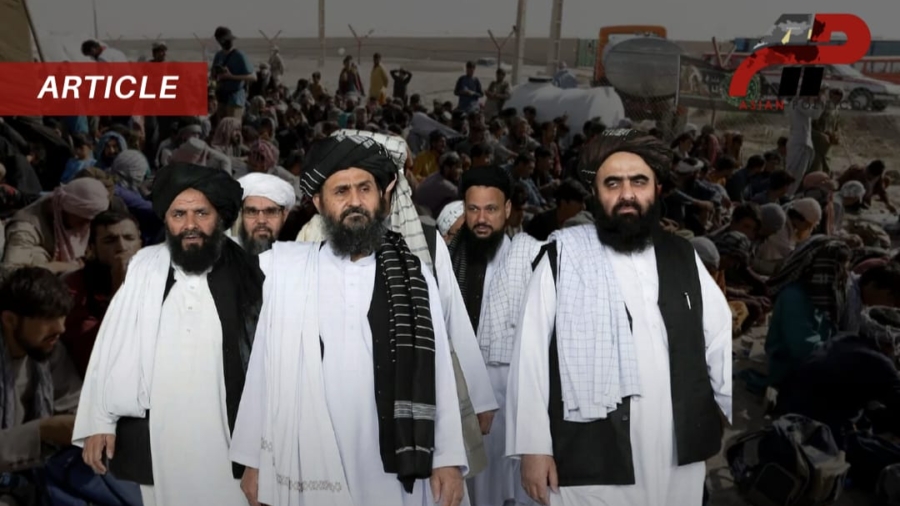
Since the Taliban’s takeover of Afghanistan in August 2021, the country has plunged into an escalating humanitarian crisis, with human trafficking becoming a stark and pervasive issue. The dire economic conditions, compounded by the international community’s reluctance to provide aid, have created a perfect storm for human trafficking to thrive. The Taliban’s governance, marked by rigid cultural norms and lack of inclusivity, has further exacerbated the situation, leaving millions vulnerable, particularly women and children.
Afghanistan’s economy has been in freefall since the Taliban’s return to power, with widespread poverty driving families to desperate measures. Reports have surfaced of families selling their children to pay off debts or secure food, highlighting the severe desperation many face. A CNN report revealed an Afghan family forcibly marrying their nine-year-old daughter to an older man to alleviate financial burdens. Such distressing practices are not isolated incidents but rather indicative of a broader, systemic issue.
International aid, crucial for alleviating this crisis, has been largely withheld to avoid legitimizing the Taliban regime. This has left nearly half of Afghanistan’s population in urgent need of humanitarian assistance. The lack of aid has made food and resources increasingly scarce, pushing impoverished families further into desperation and increasing the likelihood of children being sold or trafficked.
The Taliban’s rule has indirectly facilitated human trafficking through several avenues. The ban on forced marriages by the Taliban, while a step in the right direction, has been inconsistently enforced, particularly in remote areas where Taliban control is weak. The practice of Bacha Bazi involving the trafficking of young boys for sexual exploitation, remains prevalent despite the Taliban’s historical ban on the practice during their previous rule from 1996-2001.
Moreover, the Taliban’s purges of former police officers who investigated pedophile rings have allowed these networks to continue operating with impunity. The deteriorating security situation and lack of effective governance have further hindered efforts to combat human trafficking. The Taliban’s internal divisions and varying levels of extremism among its factions have also led to inconsistent policies and enforcement, weakening efforts to curb trafficking.
Women and girls are particularly vulnerable under the Taliban’s rule. The decision to ban secondary education for girls has severely limited their opportunities for empowerment and economic independence, making them more susceptible to trafficking. Families, perceiving girls as a financial burden due to these restrictions, are more likely to sell them to alleviate economic hardships.
The physical and psychological trauma inflicted on trafficking victims, especially young girls, is profound. Forced marriages often lead to early pregnancies with high maternal mortality rates due to inadequate medical support. Victims of human trafficking frequently experience polyvictimization, facing multiple forms of abuse that compound their trauma and social exclusion.
The international community’s response to Afghanistan’s crisis has been criticized for its selective compassion. The stark contrast between the urgent aid provided to Ukrainian refugees and the reluctance to support Afghan refugees highlights a troubling disparity. This selective approach has left many vulnerable groups, including persecuted minorities, human rights advocates, and those with ties to the former government, without necessary support.
Iran and Pakistan, the largest host countries for Afghan refugees, have also threatened mass deportations , further endangering those fleeing Taliban persecution. Western countries’ reluctance to grant refugee status or right to remain has left many at risk, despite the heightened dangers they face under Taliban rule. Addressing Afghanistan’s human trafficking crisis requires a multifaceted approach. Immediate humanitarian aid is crucial to alleviate the economic desperation driving families to sell their children. The international community must prioritize humanitarian aid over diplomatic and political concerns, ensuring that food, water, and medical supplies reach those in need.
Additionally, a pragmatic, human rights-centered approach is necessary to tackle human trafficking. This includes supporting mental health programs for trafficking victims, providing education and vocational training to empower vulnerable populations, and strengthening law enforcement efforts to dismantle trafficking networks. The formation of a mixed government that includes diverse factions could help stabilize Afghanistan and attract international support. Ensuring transparency and accountability in the distribution of aid will be critical to prevent corruption and ensure that resources reach those most in need.
The situation in Afghanistan is dire, with human trafficking emerging as a significant and growing crisis under Taliban rule. The international community’s reluctance to provide aid has exacerbated the humanitarian disaster, leaving millions at risk. Addressing this crisis requires urgent, coordinated action focused on humanitarian aid, human rights, and effective governance to prevent further suffering and exploitation. The longer the international community delays, the more lives will be lost, and the greater the human toll will be.

Independent Researcher
Add a Comment