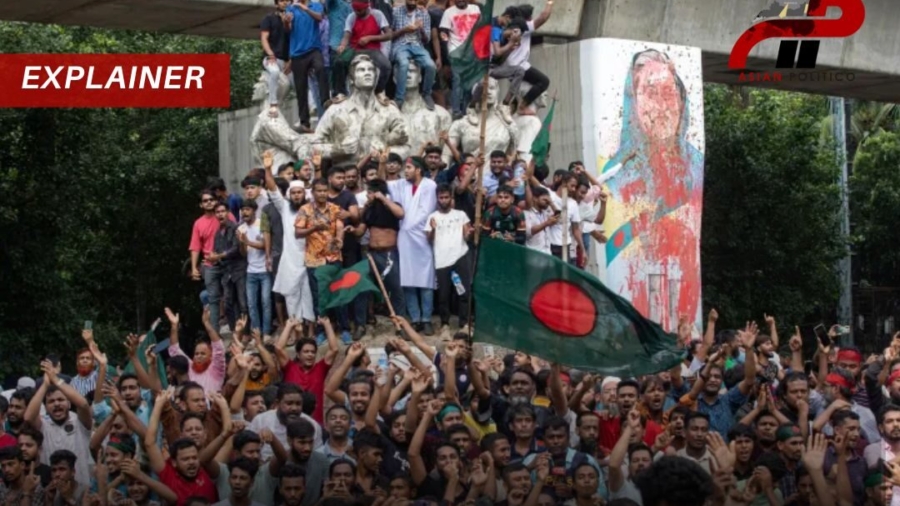
The student movement that started in July in Bangladesh would go down in history as the most remarkable and successful global movement. Within a few weeks, the students who stood against the discriminatory quota allocation succeeded not only in making their voice heard but in overthrowing the sitting government.
What led the students to start a protest?
The protests began when a high court order reinstated a controversial quota system reserving up to 30 percent of civil servant jobs for relatives of freedom fighters who participated in Bangladesh’s 1971 war of independence against Pakistan. Students argued that the existing quotas unfairly favored supporters of the Awami League, the ruling party of Prime Minister Sheikh Hasina. The 76-year-old Prime Minister Sheikh Hasina’s dictatorial leadership came to an end after more than a month of brutal protests that claimed the lives of at least 300 people.
How did these protests topple the government?
On July 1, the students blocked the road and railway lines to demand reform of the quota system, but Hasina, their PM (in the fifth term of its tenure), says they were wasting their time. On July 16, violence intensified in Dhaka when the protestors and the pro-government supporters fought by using sticks and hurling bricks at each other, and then the government ordered the closing of educational institutes. On July 18, the PM was rebuffed. She said that every murder in the protests would be punished, while the slogan “down with the dictator” was being chanted by the protesters. In the country, the internet was also blacked out by the government. On July 21, the Supreme Court gave its verdict and ordered that 93% of government jobs would be allocated on merit, 5% for freedom fighters, and the remaining 2% would be reserved for ethnic minorities, transgender people, and disabled people. This was a partial victory for students after the representatives of both sides met.
What happened after the SC verdict, and why did the protesters want the resignation of their PM??
However, after the SC decision, the protestors returned last week and insisted on a public apology from Hasina for the violence, the reinstatement of internet connections, the reopening of college and university campuses, the release of those detained, and justice for the individuals who lost their lives last month. Subsequently, the student group urged a countrywide non-cooperation movement with the goal of ‘Hasina must resign.’
On August 5, the PM resigned and fled the country, and celebrations have erupted in the country since her resignation.
Today, August 6, Bangladesh’s president dissolved the parliament, paving the way for the formation of an interim government. To sum up, this revolution is not less than a miracle.

Bringing you updates across Asia!
Add a Comment